Accessibility Tools

Visiting hours:
The National Museum of Art of Romania
, the Theodor Pallady Museum and the K. H. Zambaccian Museum can be visited: Wednesday-Friday 10am-6pm
Saturday-Sunday 11am-7pm, Monday and Tuesday closed. Free entry on the first Wednesday of the month.
The Art Collections Museum: Monday, Tuesday and Friday, 10am-6pm, Saturday and Sunday 11am-7pm, closed Wednesday and Thursday. Free entry on the first Tuesday of the month.
Last entrance: 1 hour before closing for The National Museum of Art of Romania and the Art Collections Museum and 30 minutes for the Theodor Pallady Museum, the K. H. Zambaccian Museum and the temporary exhibitions.
For guided tours, please make a reservation at secretariat@art.museum.ro at least 7 days in advance.
For visits to our museum without guided tours there is no reservation necessary.

Starting with February 4, 2026, the Theodor Pallady Museum is temporarily closed for reorganization and renovation works.

The National Museum of Art of Romania
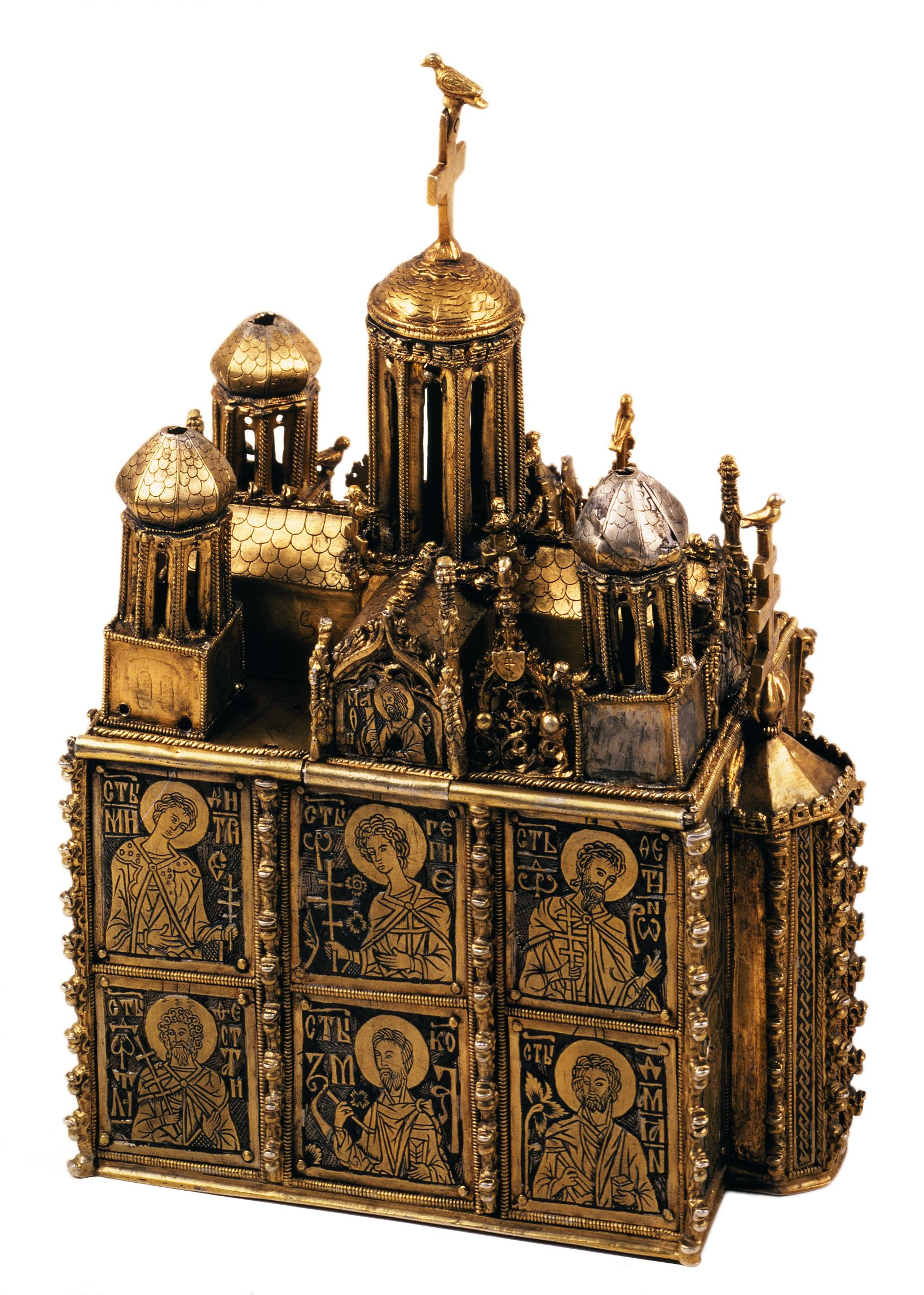
Kivotion
Artwork description
Kivotion
Hammered silver, chiseled, engraved, enameled and parcel gilt
23,5 x 15,8 x 14,5 cm
Wallachia; southern-Danube workshop (?)
16th c.
Inv. 14083 / M 1446
Artwork location
Romanian Medieval Art Gallery, room 2

Donations made by the Craiovescu family to the Bistrița monastery in the early 16th c. also include this silver kivotion.  The reliquary is in the shape of a Byzantine five-domed church (one missing), the 'east side' of the oblong, rectangular nave ending with a polygonal apse representing the altar.

The miniature church is decorated with two superimposed rows of small rectangular plaques and Gothic arches and fleurons of Western influence. The engraved plaques represent important figures in Church history. On the ‘north side’ are prophets (Aaron with the flowering rod, Elijah, Habakkuk, Jeremiah) and hymnographers John of Damascus and Kosmas of Maiuma. On the 'east side' are saints Basil the Great, Gregory the Great and John Chrysostomos, authors of the Orthodox Church Liturgy, along with Saint Nicholas. The ‘south side’ features military saints Michael and Demetrios, Theodor of Tyre and Theodore Stratelates along with healer saints Kosmas and Damian. On the ‘west side’, marking the entrance into the church, is the icon of the Mother of God with Christ child (Hodegetria), flanked by Saint Peter and Paul (the plaque representing the latter is missing).

The blend of typical Orthodox iconography and Western decorative elements is a feature of many contemporary religious silver pieces preserved in Wallachia. This attests to the wide spread of decorative motifs, the far-reaching commercial connections local boyars and princes had, and, last but not least, to the workshop practices of lucrative producers who delivered such commissions.
 

See more works in the Romanian Medieval Art Gallery

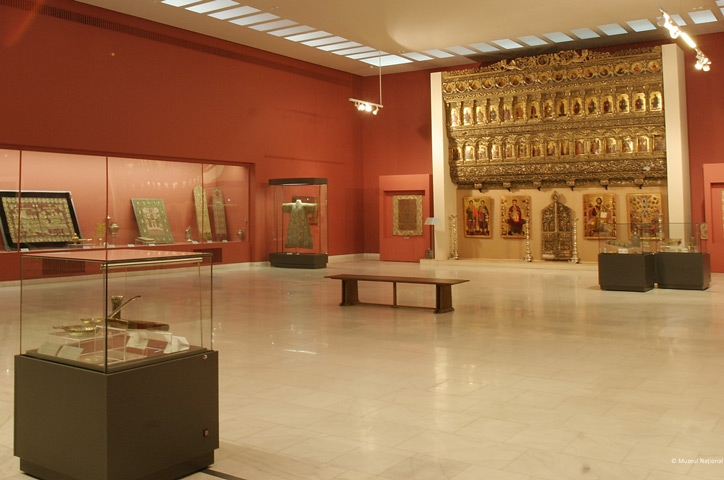
Romanian Medieval Art Gallery

Romanian Medieval Art Gallery

Over 900 icons, mural paintings, embroideries, manuscripts, silverware, woodcarvings, many of them unique, amply survey Romanian art from the 14th – to the early 19th century. Items on display showcase developments in Moldavia, Wallachia and Transylvania, reflecting the intricate manner in which a traditional Byzantine layer blended in Oriental as well as Western influences to generate original local art forms.

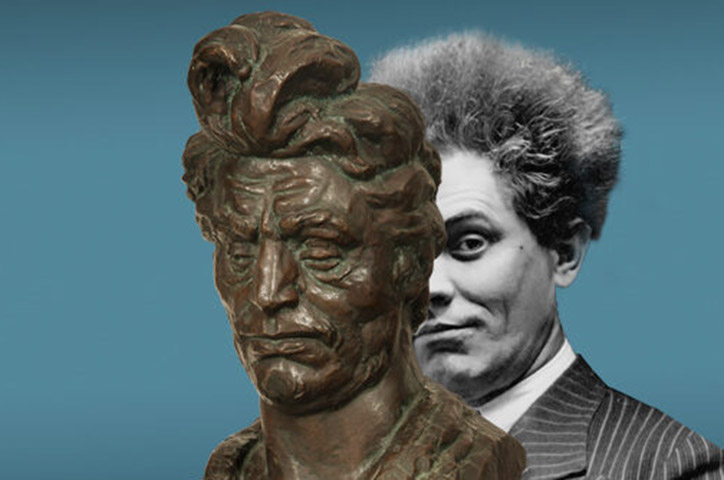
Romulus Ladea – Sculpture Exhibition

Romulus Ladea – Sculpture Exhibition

The National Museum of Art of Romania invites you to the opening of the autumn exhibition season with the exhibition of the creator of the Cluj school of sculpture, Romulus Ladea.

Theodor Pallady Museum

Theodor Pallady Museum

The museum brings centre stage a core selection of paintings by Theodor Pallady. Together with over 800 prints and drawings from the artist’s Parisian years, these are part of the Serafina and Gheorghe Răut collection, donated to the Romanian state at the end of the 1960s. The collection also comprises French, Dutch, English and Spanish paintings, European furniture and sculpture and a host of various objets d’art which speak eloquently about the manner in which Romanian inter-war intellectuals tried to emulate general trends.

Facebook Page

Acest site folosește cookies

Folosim module cookie pentru a vă pune la dispoziție caracteristici de social media și pentru a analiza traficul. Navigând în continuare, vă exprimați acordul asupra folosirii acestora.