Accessibility Tools

Visiting hours:
The National Museum of Art of Romania
, the Theodor Pallady Museum and the K. H. Zambaccian Museum can be visited: Wednesday-Friday 10am-6pm
Saturday-Sunday 11am-7pm, Monday and Tuesday closed. Free entry on the first Wednesday of the month.
The Art Collections Museum: Monday, Tuesday and Friday, 10am-6pm, Saturday and Sunday 11am-7pm, closed Wednesday and Thursday. Free entry on the first Tuesday of the month.
Last entrance: 1 hour before closing for The National Museum of Art of Romania and the Art Collections Museum and 30 minutes for the Theodor Pallady Museum, the K. H. Zambaccian Museum and the temporary exhibitions.
For guided tours, please make a reservation at secretariat@art.museum.ro at least 7 days in advance.
For visits to our museum without guided tours there is no reservation necessary.

Starting with February 4, 2026, the Theodor Pallady Museum is temporarily closed for reorganization and renovation works.

The National Museum of Art of Romania

The Gallery hosts Romania’s premier collection of European art. In time, the Picture Gallery of King Carol I was complemented with works from various the Ioan and Dr. Nicolae Kalinderu, Toma Stelian, Anastasie Simu, and Al. Saint-Georges collections alongside paintings from the Bucharest Municipal Picture Gallery. After 1950 the collection continued to grow through donations and acquisitions.

Paintings and sculptures reflect developments of important European schools in chronological order. Paintings by Domenico Veneziano, Jacopo Bassano, Bronzino, Tintoretto and Luca Giordano tell a story of Italian art throughout nearly four centuries, while those of Rembrandt and Jan Davidsz de Heem remind visitors of the Golden Age of Dutch art. Flemish art of the 17th century is particularly well represented through works by Pieter Paul Rubens, Pieter van Mol, Pieter Brueghel the Younger and Jan Brueghel the Elder. Spanish school highlights focus on three El Greco paintings illustrative of his career development. The German school includes works by Lucas Cranach the Elder and Hans von Aachen, whereas the French one brings center stage paintings by famous 19th century artists such as Claude Monet, Paul Signac and Alfred Sisley alongside sculptures by Auguste Rodin, Camille Claudel and Antoine Bourdelle.
 

Romanian Modern Art Gallery

Romanian Modern Art Gallery

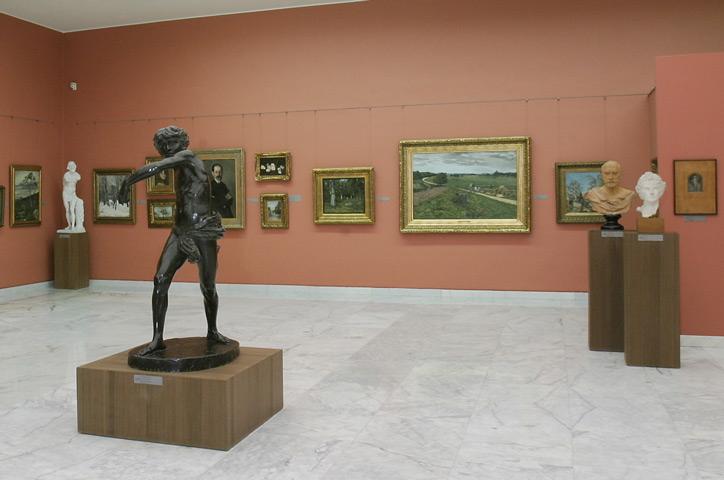
The Romanian Modern Art Gallery tells the story of Romanian art from the mid-nineteenth to the late twentieth century. Representative works by Theodor Aman, Nicolae Grigorescu, Ioan Andreescu, Theodor Pallady among others, illustrate connections with contemporary French painting while those of M.H. Maxy, Marcel Ianco, Victor Brauner trace the contribution of Romanian art to the European avant-garde of the 1920s and 1930s. Early sculptures by Brancusi reveal the master’s will to break away from academic tradition and find a way of his own. 

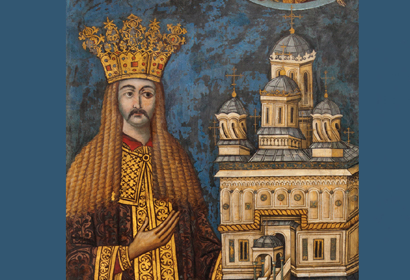
"Beyond the Legend: Neagoe Basarab"

Curators: Emanuela Cernea, Iuliana Dumitrașcu

The Art Collections Museum

The Art Collections Museum

Inaugurated in 1978 as a Department of the National Museum of Art of Romania, the Art Collections Museum showcases artistic interests that prevailed in Romanian society from the early 20th century onward. Over 30 collections on permanent display incorporate a variety of art pieces and collectibles, ranging from Romanian and European fine and decorative arts to Oriental art. Donated over nearly a century by both collectors and artists, they bear witness to their owners’ taste and economic power, their leaning toward famous names or contemporary art, as well as to the artists’ particular interests, surroundings, and daily studio practice. Works by well-known Romanian painters such as Theodor Aman, Nicolae Grigorescu, Ioan Andreescu, Nicolae Tonitza, Gheorghe Petraşcu, Theodor Pallady, Lucian Grigorescu, Iosif Iser, Camil Ressu, Francisc Şirato, Alexandru Ciucurencu, Dimitrie Ghiaţă are exhibited alongside European and Japanese prints and drawings, French furniture, Oriental carpets, and folk icons from Transylvania. This unique museum is hosted by the former Romanit palace. The building, an example of modern Bucharest architecture, was recently restored and refurbished. Wherever possible, displays suggest the original layout and atmosphere of individual collections.

Facebook Page

Acest site folosește cookies

Folosim module cookie pentru a vă pune la dispoziție caracteristici de social media și pentru a analiza traficul. Navigând în continuare, vă exprimați acordul asupra folosirii acestora.